clear on women's health
Your twelve month roadmap from unsure where to start, to a clear process, confident managers and evidence it worked.
For organisations that know women's health matters and don't know where to begin.
Who this is for
if any of this sounds familiar
Most organisations we speak to are not sceptical. They are stuck, and usually for the same handful of reasons.
You know women's health at work has moved up the agenda, and you have nothing in place yet.
Your managers are improvising, and the careful ones avoid the conversation rather than get it wrong.
You've put a policy in place. Now you want people to know it's there, and managers to know what to do when someone uses it.
You are certifying or recertifying as a B Corp, and you have just read the workplace culture requirement.
Someone internally has asked for this, a women's network or one person who spoke up, and you want to come back with more than good intentions.
People are taking days that get recorded as something else, and you cannot see the pattern.
Then this is built for you.
Picture this
four things that exist in december, that don't exist today
One
a route
Someone knows who to tell, what happens next, what gets written down and what does not. Your own managers agreed it in the first quarter. It is not a template that arrived by email.
Two
managers who can use it
They have practised the conversation twice. The second time on situations that actually came up in your organisation, not invented ones.
Three
people who know it's there
A workforce with the language to name what is happening, and the knowledge that raising it goes somewhere rather than nowhere.
Four
evidence
Your own numbers on what shifted, in your people's own words, ready for a board pack, a leadership update or an action plan.
if you're thinking you've booked training before and nothing changed
I know. Most workplace training on this is a talk. It is interesting for ninety minutes, people nod, and then everyone goes back to their inbox and nothing in the organisation is any different on Monday. Nobody can say whether it worked, because nobody measured anything.
The difference here is that something exists afterwards. By the end of the first quarter your managers have agreed a route: who someone tells, what gets offered, what is recorded, what stays private. That is a document you own, written by your own people, and it is what the second session teaches to everybody else.
Then it gets tested. The third session works on what has genuinely come up since, so your managers handle the real thing with support rather than meeting it cold. And at the end you get numbers on what moved, not a feeling that it went well.
I should also say what I am not. I am not a doctor, and this is not a clinical programme. The clinical facts are published, stable and quotable, and I quote them with their sources. What cannot be looked up is what to say when someone sits down and starts to explain why they have been struggling for months, and what happens next in your organisation when they do. That is the part I train, and it is where this goes well or badly.
The roadmap
four sessions, one a quarter
Managers go first, and that is not a preference. Running a staff session first tells people this can be raised, in an organisation where nobody yet knows how to receive it. Each stage produces something the next one needs.
Q1 · Managers
agreeing what happens here
The five-part video course The Conversation as pre-work, then ninety minutes on what the guidance asks of you, recognising it at work, and what to say when someone tells you something difficult. The session ends by agreeing your route.
From every manager handling it differently, and the careful ones avoiding it. To one agreed answer, written down, that your own managers wrote.
Q2 · Staff
the whole picture, and the door
Ninety minutes on women's hormonal health across a working life, organised by how it shows up at work rather than by condition. The cycle and how to work with it. Perimenopause and menopause. The conditions that are more than a bad month. Then your route, by name.
From people assuming this is about somebody else, so taking the day and calling it a migraine. To a room where everyone sees themselves in it, and knows which door to use.
Q3 · Managers
using it when it isn't textbook
Ninety minutes built on what has actually come up in your organisation since Q2, anonymised beyond recognition. Adjustments in practice. The conversations that do not go to plan.
From a process that exists on paper and has never been tested. To managers who have handled the real thing, with support, and know what to do when it is messy.
Q4 · Staff
depth, and the proof
Ninety minutes going deep on whichever area the year has shown matters most to your people, chosen by you. Plus the impact session, where we go through the year's numbers together.
From hoping it made a difference. To knowing what shifted, in your people's own words, with something you can take to a board.
Also included
a quarterly rhythm leaves three month gaps
These are what fill them.
You can email me between sessions
Any manager who has been through a session can write to me directly about a conversation they are unsure how to handle. I reply within two working days.
A monthly briefing
Three items, each with what changed, a link to the source, and what it means for an employer. Anyone in your organisation can subscribe, not just the people who attended.
Recordings, live for 30 days
The taught content is recorded. The questions deliberately are not, because people ask honestly when they know it isn't being kept.
Your route, written up
After Q1 you get the agreed route as a document you own, in your words, ready to sit alongside your policy or inside your handbook.
The video course for anyone who joins later
People arrive mid-year. New managers get The Conversation on joining, so the route survives your own turnover.
An impact report you can actually use
Written so it can support a board pack, a leadership update or a B Corp submission. If you need supporting documentation for a certification or a reporting submission, ask and I'll put it together.
Who you'll be working with
hello, I'm Lucy
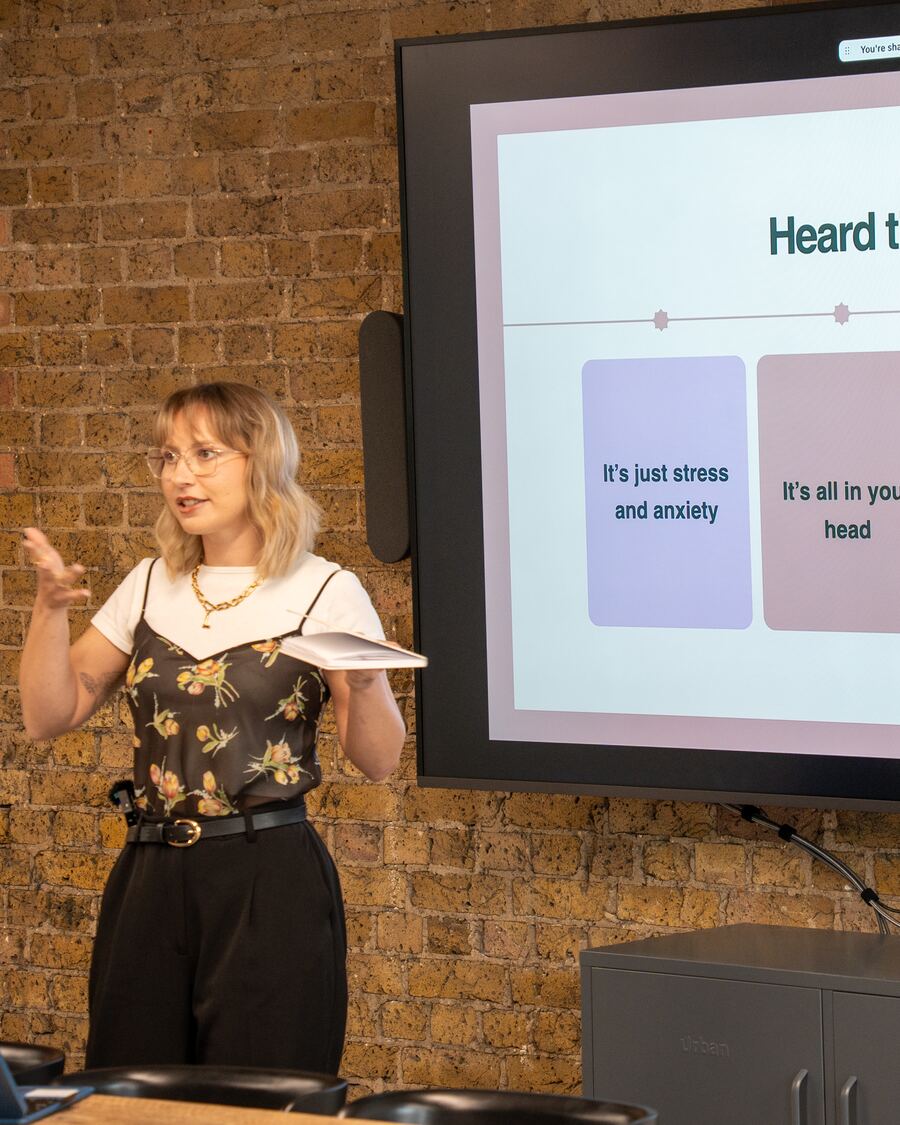
I train managers and teams on women's health at work, and I came to it from counselling and coaching rather than from medicine. That matters more than it sounds, because the hard part of this has never been the biology.
The hard part is the conversation. Knowing what to say when someone is upset. Knowing when to stop talking. Knowing how to respond without promising something you cannot deliver or making someone feel like a problem to be managed. That is what I trained in, and it is the thing most providers in this space cannot teach because they have never been taught it themselves.
Before this I spent years in university wellbeing, which is the job of noticing the person who is quietly struggling and has not said anything yet. It turns out to be the same pattern in a different building.
I work with one other person who co-delivers sessions with me, so you are never left waiting on one diary.

Background
- Level 6 Graduate Certificate in Humanistic and Psychodynamic Counselling, Goldsmiths
- Level 5 Coaching Professional
- Three years coaching adults with ADHD, autism and mental health needs
- Several years in university wellbeing and students' union work
- Professional indemnity and public liability insurance in place
What people say
from the rooms I've been in
"It was a brilliant lunch and learn session for our team, really engaging, informative and full of practical takeaways. Lucy clearly has a huge amount of knowledge, but she explains everything in such an easy, relatable way that makes it really simple to digest and learn from."
Emma BurtonHead of Operations & People"I think it was hugely beneficial as a guy to be at the presentation and raise awareness as to what my colleagues are going through. Since the talk I have noticed women being more honest about it, and it will definitely impact the business positively. Highly recommend."
AttendeeAnonymous feedback"Thank you so much Lucy, this was such an insightful and useful talk which every company should have. Everything was explained so well and clearly. Really excited to start taking on board all the great tips."
AttendeeAnonymous feedback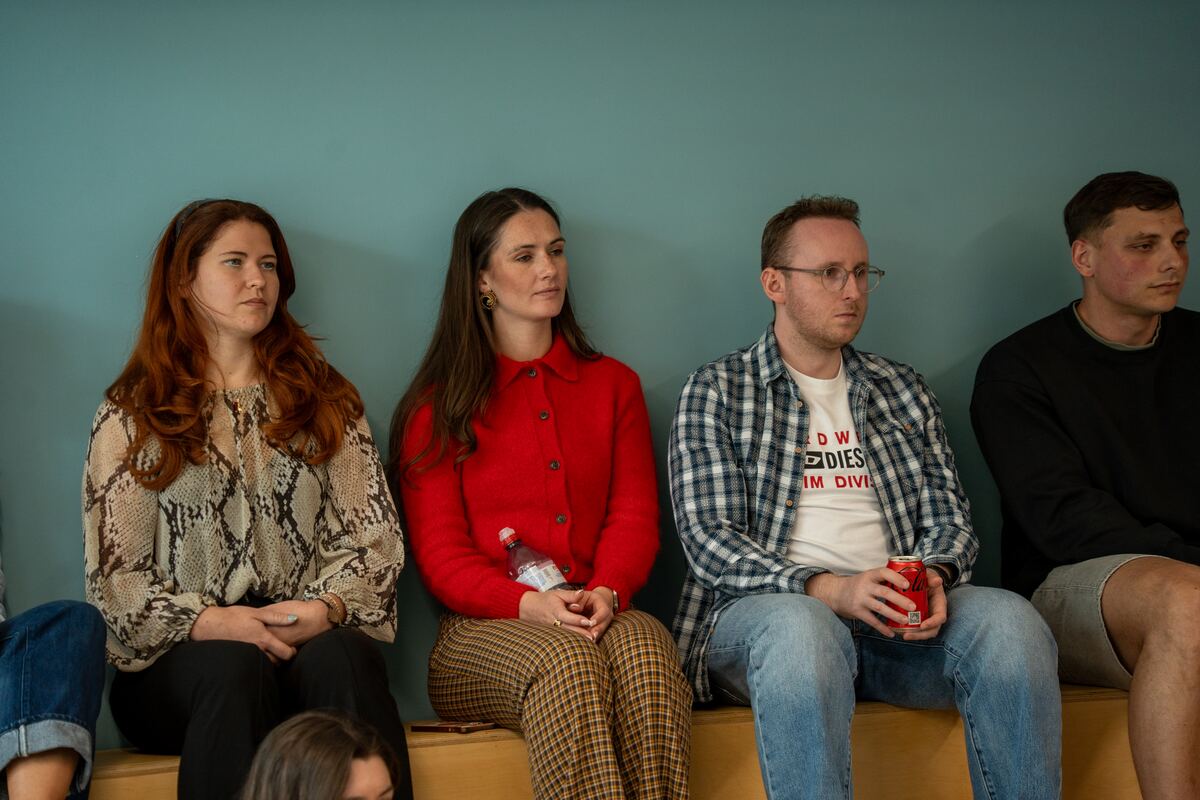
These come from attendees at a recent workshop, rated 4.88 out of 5 by eight respondents, all of whom said they would recommend it. That session's numbers, not an average across everything I have run. The twelve month roadmap is a new programme, so there is no year of results to show you yet. When there is, it will be on this page with the sample size next to it.
Questions
the things people actually ask
should we include the men?
Yes, and it is usually the thing people are most nervous about. The strongest feedback I have on file is from men, reporting that they changed how they behave at work afterwards. Nothing in the sessions asks anyone to disclose anything about themselves, so it does not put people on the spot. A culture where this can be discussed is not one where half the workforce has been sent out of the room.
what if our people don't want to talk about it?
Nobody is made to. The sessions are built so people can take what is useful without saying a word, and the questions are deliberately not recorded so anyone who does want to ask can do it honestly. What the research suggests is that the appetite is already there. In a BSI survey of 6,494 women across seven countries, seven in ten said they wanted their employer to have a clear process and approach.
we already have a platform or a policy. does this overlap?
It complements rather than competes. A platform is passive, opt-in and individual, so it is never in the room when a manager has to decide how to respond to someone. A policy is a document, and documents do not have conversations. This works on the bit in between, which is the bit where it goes well or badly.
we're going for accreditation. does this help or duplicate?
It helps. Schemes of that kind assess across areas that include training and evaluation, and this produces evidence for both. I do not award badges and I am not an assessor, so there is no conflict, and nothing here is a substitute for going through their process. It is the work that makes their process go more smoothly.
how much of our time does it take?
Four sessions of ninety minutes across a year, two for managers and two for teams, plus one survey per session that your team forwards as a link. What I need from you is that the sessions are promoted properly and people are given the time to attend. That is the one thing I cannot do from the outside, and it is what decides whether the numbers at the end mean anything.
what happens if we need to move a session?
We move it. Things come up over twelve months and the programme is designed with that assumption, not against it. The order matters more than the dates, because each session builds on the one before, so we keep the sequence and shift the calendar.
can we just book one session instead?
Of course, and for a lot of organisations that is the right place to start. A single workshop gives people language and permission they did not have that morning. It will not leave you with a route, trained managers or a year of evidence, and I would rather say that plainly than sell you a programme you are not ready for.
what this isn't
Saying this plainly is what makes everything above believable. If a provider will not tell you where their work stops, that is worth noticing.
On measurement: what you get is what your people say changed, in their own words and their own numbers, asked anonymously after each session. It is self-reported change rather than a controlled study, and it is described that way in the report. The impact report is training evidence you can use in your own submissions. The duty to publish anything, and to track it, stays with you.
book a call to find out what your twelve months would look like
What to expect from the call
- Twenty minutes, and a real conversation rather than a pitch.
- We work out where you actually are, and what would need to happen first.
- You get the outline and the costs in writing afterwards, so you can take it to whoever needs to see it.
- If a single session is the better first step, or if this isn't the right thing for you at all, I'll say so on the call.